
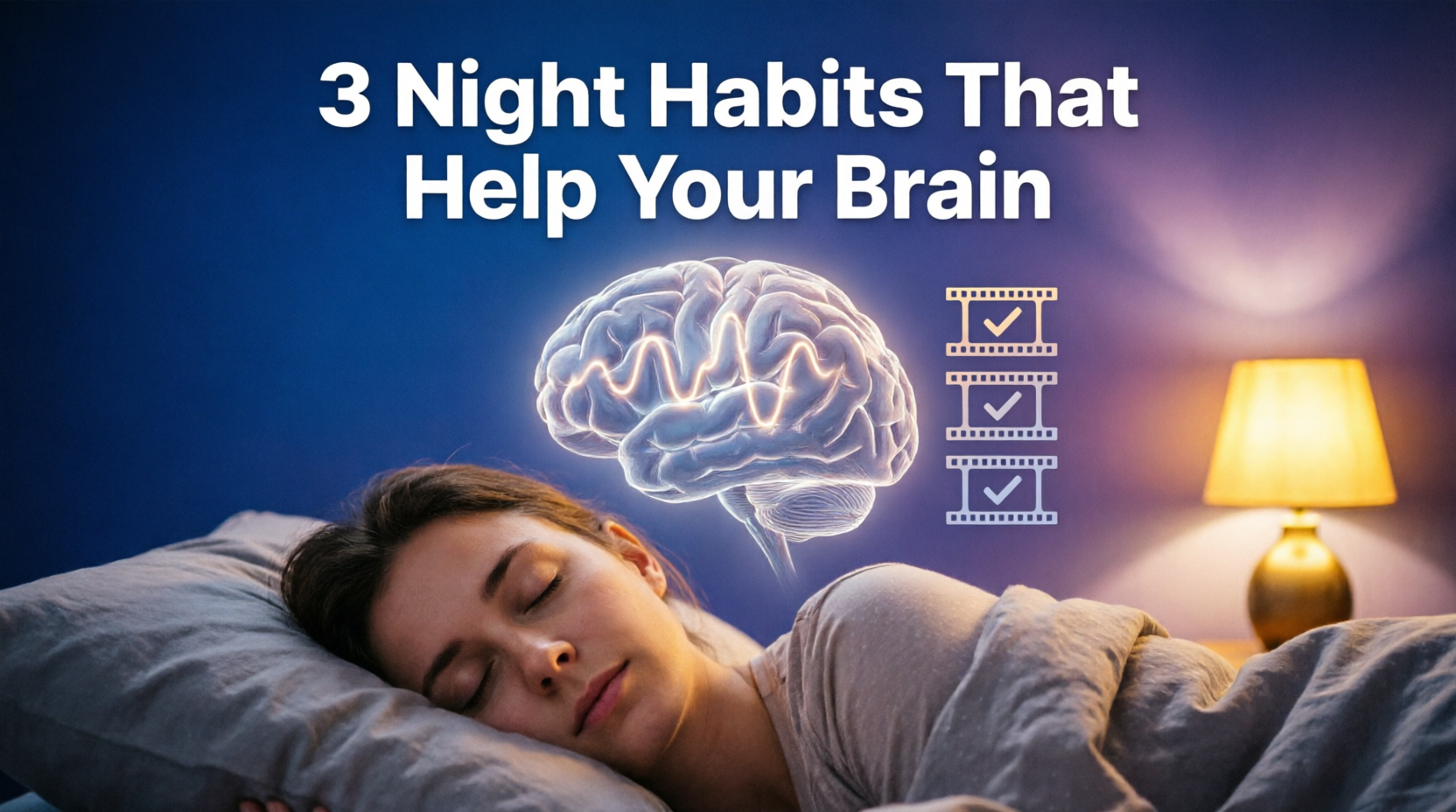
3 Night Habits That Help Your Brain Process the Day Better
Discover three simple night habits — closing mental loops, tagging wins, and signaling shutdown — that support how your brain reviews and organizes daily experiences for calmer, sharper mornings.
We often focus on morning routines for a productive day, but what happens in the last hour or two before sleep can have an even bigger impact. While your body rests, your brain stays busy sorting through the day’s events — conversations, problems, emotions, and small moments. How you end the evening influences what your brain decides to strengthen and carry forward into tomorrow.
Here’s the main idea in simple terms:
Your brain does not simply rest at night. Instead, it actively reviews the day’s experiences like a film editor, deciding what to keep and what to let go. Unfinished tasks create mental “loops” that keep the brain alert and anxious, making it hard to relax. By closing these loops with clear plans, tagging three positive moments from the day, and signaling a proper shutdown without new stimulation, you can guide your brain to process experiences more constructively. These three simple night habits help reduce overthinking, strengthen useful memories, and lead to calmer, sharper mornings. The key is giving your brain clear instructions before sleep rather than leaving it to replay worries and random inputs.
In this article, we explore three practical night habits that help your brain process the day more effectively. You will learn why unfinished tasks create restlessness, how highlighting small wins changes your outlook, and why reducing stimulation before bed supports better mental rest. These ideas are grounded in how the brain naturally works at night, explained in simple terms with everyday examples.
The Brain as a Nighttime Editor
During sleep, the brain reviews the “raw footage” of your day. It decides which experiences are important enough to keep and which ones can fade. If you go to bed with many open questions or worries, the brain treats them as urgent and keeps replaying them. This can lead to restless nights and heavier mornings filled with the same concerns.
A well-known psychological idea called the Zeigarnik effect explains this: unfinished tasks stay active in our minds more than completed ones. Your brain does not rank them by size — a small undone errand can feel as pressing as a big work deadline. This constant mental pinging raises background stress and makes true rest difficult.

Habit 1: Close Mental Loops Before Bed
One powerful way to help your brain is to close as many open loops as possible in the evening. This means writing down unfinished tasks along with a specific plan for when and how you will handle them tomorrow.
For example, instead of lying awake thinking “I need to reply to that email,” write: “Reply to client email at 9:30 am tomorrow after morning tea.” Giving the brain a clear “valet ticket” for each task signals that the matter is under control. This reduces the mental alerts that keep you tense.
Many people notice that after making such a short list, they fall asleep faster and wake up with less mental clutter. It is a small act that tells the brain: the day is handled, now it can focus on sorting and restoring.
Habit 2: Tag the Wins That Matter
Our brain has a natural tendency to pay more attention to negative or threatening experiences — a survival feature from earlier times. At night, this can mean the brain strengthens memories of frustrations or mistakes more than quiet successes.
A helpful counter is to deliberately note three small positive moments from the day. These could be everyday things: listening patiently to a family member, learning one new word, or simply staying calm during a difficult moment. By “tagging” these wins, you guide the brain to reinforce pathways associated with growth and confidence rather than only problems.
Over time, this practice can gently shift how your mind processes daily life, making it easier to notice progress even on ordinary days.

Habit 3: Signal a Clear Shutdown
The final habit involves reducing new inputs in the 60–90 minutes before bed. Bright screens, scrolling, or engaging with fresh content send signals of alertness and keep cortisol levels higher than ideal for rest. The brain then struggles to shift into its processing and restoration mode.
Instead, dim the lights, keep devices in another room if possible, and choose familiar, low-stimulation activities such as reading a physical book you already know or listening to calm music. Allowing a little boredom in the quiet can actually support introspection and creativity.
This shutdown signal helps the brain understand that the day’s input is complete and it is safe to focus inward on sorting experiences.
Why This Matters in Daily Life
How we end the day influences our mood, focus, and resilience the next morning. When the brain spends the night replaying worries and open tasks, we often wake up feeling overwhelmed or tired even after enough hours in bed. On the other hand, intentional evening habits can lead to calmer starts, better decision-making, and a greater sense of control over time.
For students preparing for exams, professionals handling constant messages, or anyone managing daily stress, these habits offer a practical way to support mental clarity without major lifestyle overhauls.
Common Misunderstandings
Many believe that more screen time in bed helps them wind down. In reality, the new information and light often keep the brain in a more alert state.
Another myth is that worrying about tasks at night helps solve them. Usually, it only keeps the mind active without productive resolution. Writing a plan is far more effective than mental rumination.
Some think they can “catch up” on mental rest only on weekends. Consistent nightly habits tend to support the brain better than occasional long recovery periods.
FAQ
Why does my mind keep racing at night with unfinished tasks? The brain naturally keeps unfinished items active (Zeigarnik effect). Giving them a clear plan reduces this mental ping.
Can writing down tasks really help me sleep better? Yes. It signals to the brain that the issues are handled, allowing it to shift from alert mode to processing mode.
Is it helpful to think about positive moments before sleep? Noting small wins guides the brain to strengthen constructive pathways instead of defaulting only to problems.
How long before bed should I avoid screens? Aim for at least 60–90 minutes. This gives the brain time to downshift and begin its nighttime review work.
Do these habits work even if my day was stressful? They can be especially useful on difficult days because they help the brain process experiences more balanced rather than staying stuck on negatives.
More knowledge to get :