Scientists Discovered a Hidden Brain ‘Drain’ — Here’s How Your Brain Cleans Itself Daily
Discover the glymphatic system—the hidden drain that cleans your brain during sleep. Learn how toxins are flushed and why deep sleep is vital for brain health.
For centuries, scientists believed the brain had no lymphatic system—the network responsible for cleaning waste from the rest of your body. They thought the skull was a sealed, static container.
But they were wrong.
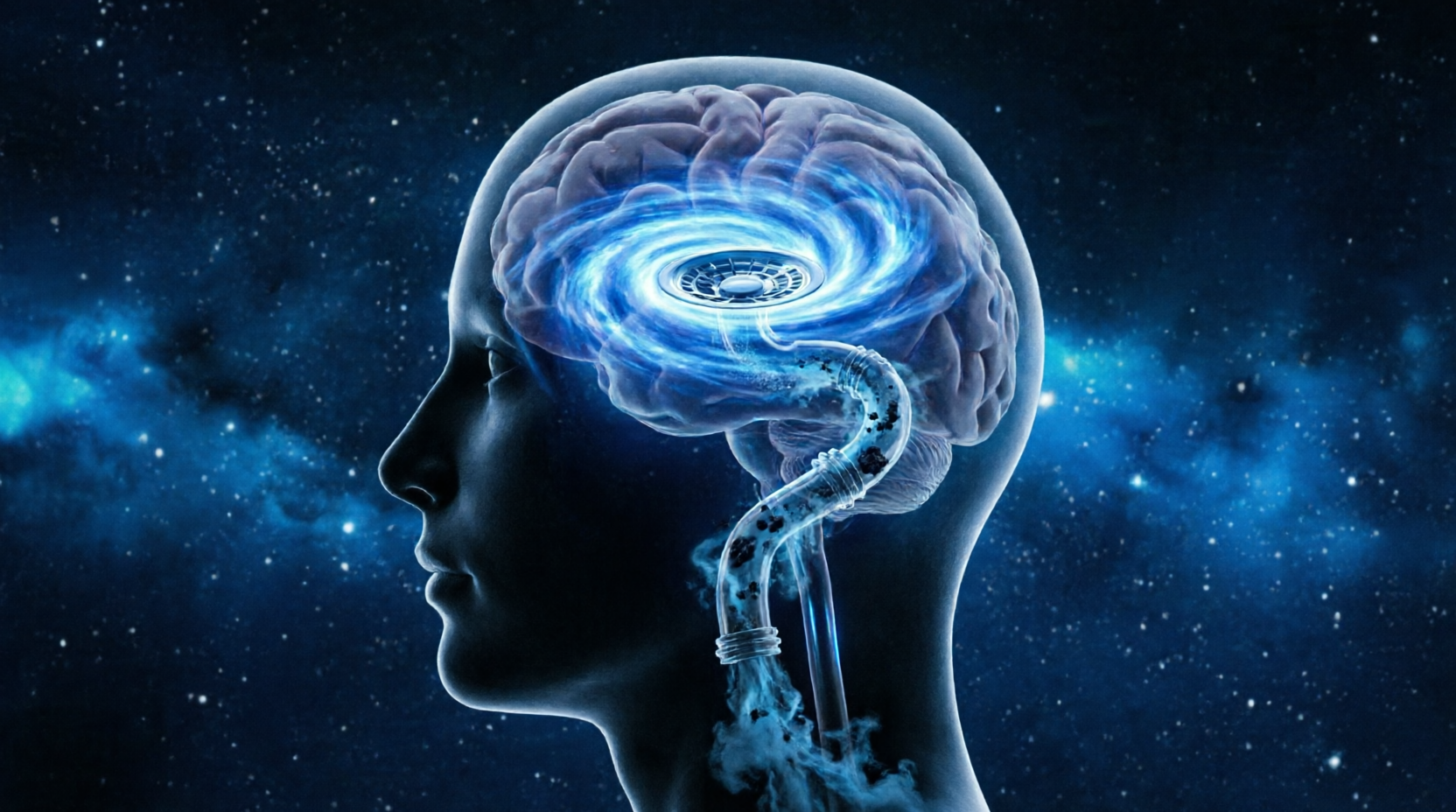
In 2012, researchers discovered a hidden plumbing system in the brain called the glymphatic system. It acts like a nightly drain, flushing out toxins and cellular trash while you sleep. This discovery is changing how we understand sleep, Alzheimer’s disease, and brain fog.
🚿 The “Midnight Cleaning Crew”
During deep sleep, your brain cells physically shrink by up to 60%. This opens up tiny channels for cerebrospinal fluid (CSF) to rush through, washing away toxic proteins like beta-amyloid that accumulate during the day. If you don’t get enough deep sleep, this “trash” stays in your brain, potentially leading to brain fog and long-term cognitive decline.
The Discovery That Changed Neuroscience
For a long time, medical textbooks taught that the brain was “immune privileged”—separated from the immune system. But when Dr. Maiken Nedergaard and her team at the University of Rochester looked closer, they found something remarkable.
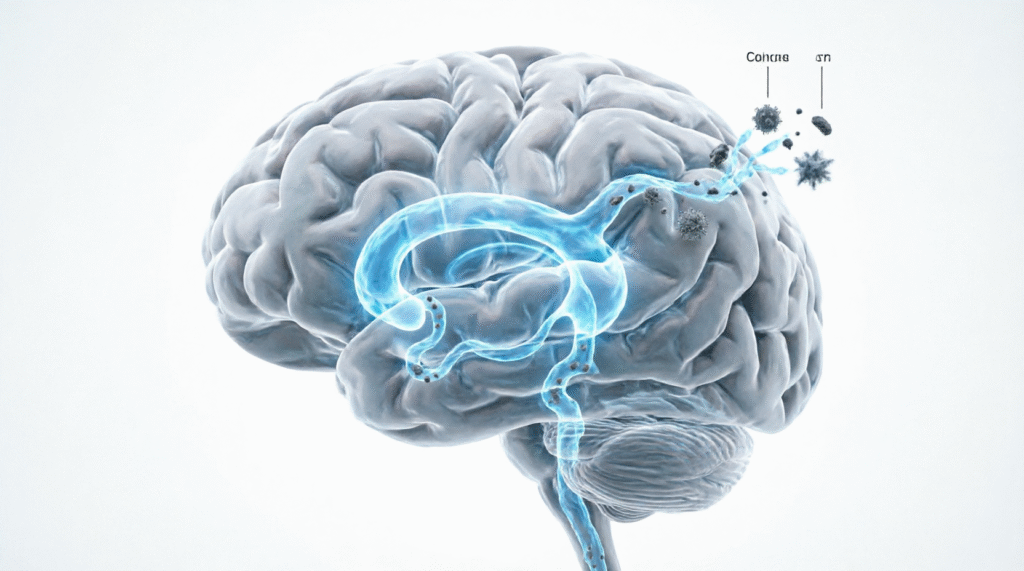
They saw a river of fluid moving through the brain. It wasn’t blood; it was cerebrospinal fluid (CSF). This fluid follows the outside of blood vessels, washing over brain cells and carrying waste out of the brain tissue.
They named it the Glymphatic System—a combination of “glial cells” (the brain’s support cells) and “lymphatic system.”
This system explains why the brain can function at such high intensity without being overwhelmed by its own waste products.
How the “Drain” Actually Works
Think of your brain like a busy city.
- During the day: The streets are full of cars (thoughts, signals, activity). Trash accumulates on the sidewalks (toxins). There is no room for garbage trucks to get through.
- At night: Traffic stops. The streets empty out. The garbage trucks (CSF) can finally drive through, hose down the streets, and carry the trash away.
The “trash” includes proteins called beta-amyloid. In healthy brains, this protein is washed away every night. But if the drain gets clogged—due to lack of sleep—this protein builds up into sticky plaques. These plaques are one of the primary markers of Alzheimer’s disease.
The Critical Role of Sleep Position
Remarkably, how you sleep might affect how well your brain cleans itself.
Some studies on rodents suggest that sleeping on your side (the lateral position) is the most efficient for glymphatic clearance. This position allows gravity and fluid dynamics to help the “drain” flow naturally. Back sleeping may be slightly less efficient, while stomach sleeping was shown to be the least effective for waste removal in these studies.
While human studies are ongoing, the evidence suggests that your sleep posture isn’t just about back pain—it’s about brain hygiene.
If you aren’t sure if you are getting enough rest to support this cleaning process, you can use a sleep need calculator to find out exactly how much rest your brain needs to finish its “shift.”
Why This Matters
The discovery of the glymphatic system changes everything we know about sleep deprivation.
When you pull an all-nighter or consistently sleep less than 6 hours, you aren’t just tired. You are essentially skipping the garbage collection service for your most vital organ.
- Brain Fog: The next day, your brain is literally cluttered with metabolic waste.
- Mood Swings: Unchecked inflammation affects emotional regulation.
- Long-term Risk: Chronic lack of deep sleep is now strongly linked to a higher risk of dementia and Alzheimer’s because the “drain” never fully opens.
This is why we have an entire section dedicated to sleep energy and habits; it is the foundation of brain health.
Common Misunderstandings
Myth 1: The brain shuts down during sleep. False. The brain is arguably more active during sleep, just in a different way. It is filing memories and cleaning house.
Myth 2: Alcohol helps you sleep better. Alcohol might knock you out, but it sedates you rather than inducing true restorative sleep. It actually blocks the glymphatic system from functioning correctly.
Myth 3: Naps can replace night sleep. Naps are great for energy, but the glymphatic system is primarily activated during deep, slow-wave sleep, which happens in long stretches at night.
Myth 4: Brain cleaning happens constantly. While some cleaning occurs, the vast majority happens during the specific sleep cycles. This is why quality of sleep matters as much as quantity.
Frequently Asked Questions
Does the brain really shrink during sleep? Yes, brain cells shrink by about 60% to create space for fluid to wash through. It returns to normal size upon waking.
What happens if the glymphatic system fails? Waste buildup can lead to neuroinflammation, which is linked to Alzheimer’s, Parkinson’s, and chronic traumatic encephalopathy (CTE).
Does exercise help the brain clean itself? Yes. Exercise increases blood flow and has been shown to improve glymphatic function, helping clear waste more effectively.
Can I “force” my brain to clean? You can’t force it, but you can optimize it. Prioritize deep sleep, stay hydrated, and avoid alcohol before bed.
Does age affect this system? Yes. The glymphatic system becomes less efficient as we age, which is why deep sleep becomes even more critical in older age.
Disclaimer: This article is for educational purposes only and does not constitute medical advice. If you have concerns about brain health or sleep disorders, please consult a medical professional.
Written by Sharjeel — Founder, WikipediaSearch Last Updated: October 2023