
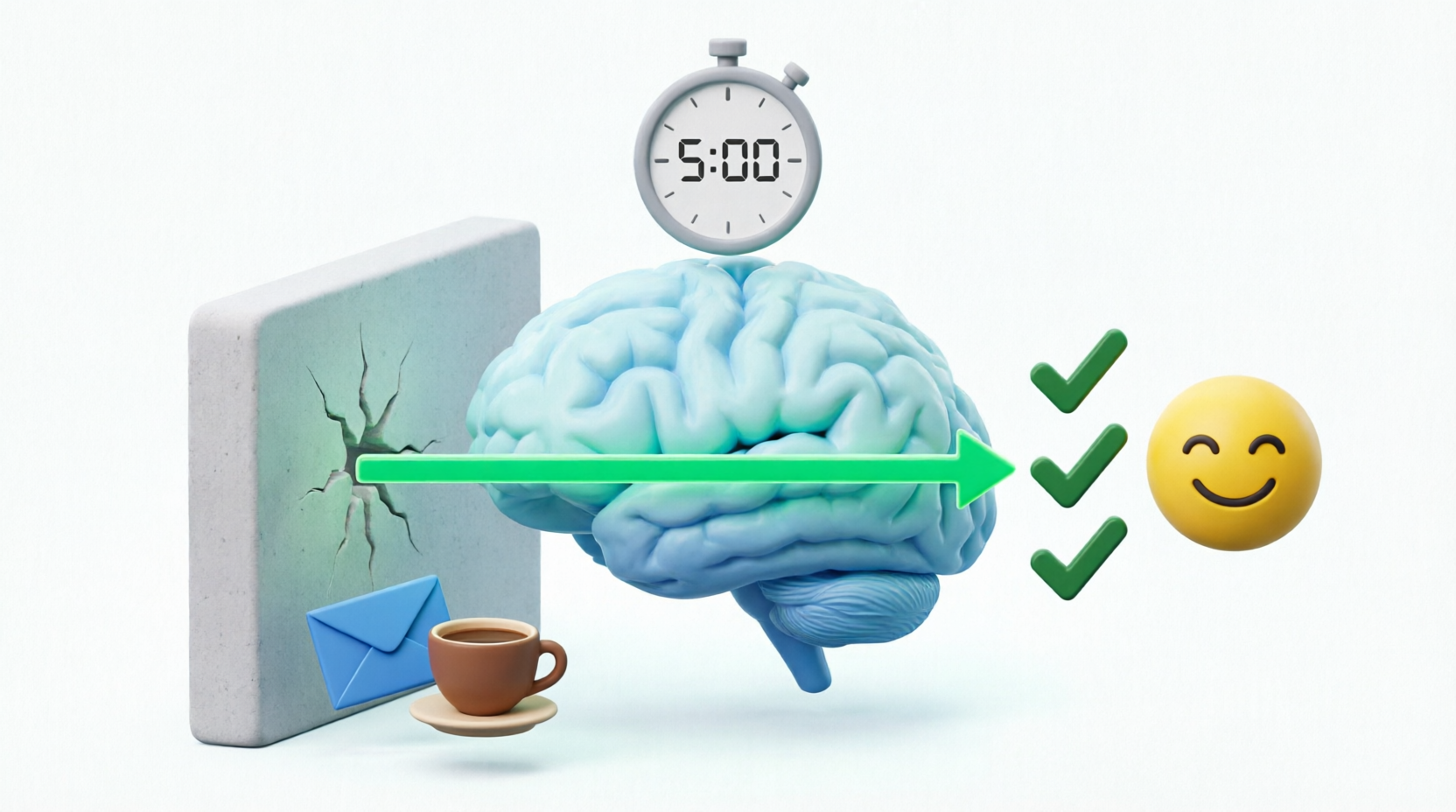
Why You Avoid 5-Minute Tasks (Brain Science)
Uncover why your brain dodges quick chores like emails or dishes, backed by psychology on activation energy and aversion. Simple fixes to stop micro-procrastination and boost daily flow.

Ever stared at a quick email reply or a simple dish to wash, knowing it would take under five minutes, yet something stops you? You’re not lazy—it’s a clever brain trick designed to save energy, but it backfires in modern life. By the end of this article, you’ll understand the hidden psychology behind avoiding tiny tasks and get simple strategies to break the cycle, reclaiming hours from needless delays.
The Sneaky Pull of Micro-Procrastination
Your mind treats even brief chores like mountains because starting anything requires mental setup. This “activation energy” barrier makes switching from scrolling to action feel exhausting. Small tasks pile up, turning your day into a slog of unfinished bits.
Think of replying to a text—your brain weighs the tiny effort against instant distractions like checking notifications. It picks comfort every time.
😴 Why Tiny Tasks Feel Like Giants
Our brains crave smooth flow, so even 2-minute jobs disrupt it.
They trigger aversion from past stress or low rewards.
Decision fatigue amplifies this—every choice drains willpower.
Perfection fears make “good enough” starts impossible.
Yet, once begun, momentum carries you through easily.
Use micro-starts to hack this natural resistance.
Why This Matters in Daily Life
These micro-delays add up to lost time and rising stress. A stack of five-minute tasks can eat an hour by day’s end, leaving you frustrated. In work or home, they block bigger goals, like how unread emails snowball into missed opportunities.
Relate it to your routine: that quick call you dodge? It festers, pulling mental energy. Fixing this frees your mind for what truly counts, boosting overall calm and productivity.
Check our brain focus science category for more on mental hurdles.

The Brain Science Behind the Block
Activation Energy Trap
Every task start demands a mental gear shift, like warming up a cold engine. Your prefrontal cortex plans the switch, but if dopamine—the reward chemical—is low, it vetoes the effort. Quick jobs lack big payoffs, so your amygdala flags them as “not worth the threat.”
Emotional Aversion at Play
Past annoyances link small tasks to bad feelings. Washing one cup? It hints at a messy kitchen overload. This is emotional friction, not time—your nervous system dodges discomfort.

Author Note: Written by Sharjeel — Founder, WikipediaSearch. Last Updated: April 2026. Disclaimer: This article is for educational purposes only and does not constitute medical or