How Rain Actually Boosts Your Solar Panels
Many think rain drowns solar power, but scattered light through clouds keeps panels humming at 15-30% capacity across drizzly US regions. From Seattle’s gray winters to Florida’s showers, these systems deliver steady energy year-round. Discover the physics, state-specific data, and upgrades that make cloudy solar a smart choice.

🌧️ Rain: Solar’s Secret Ally
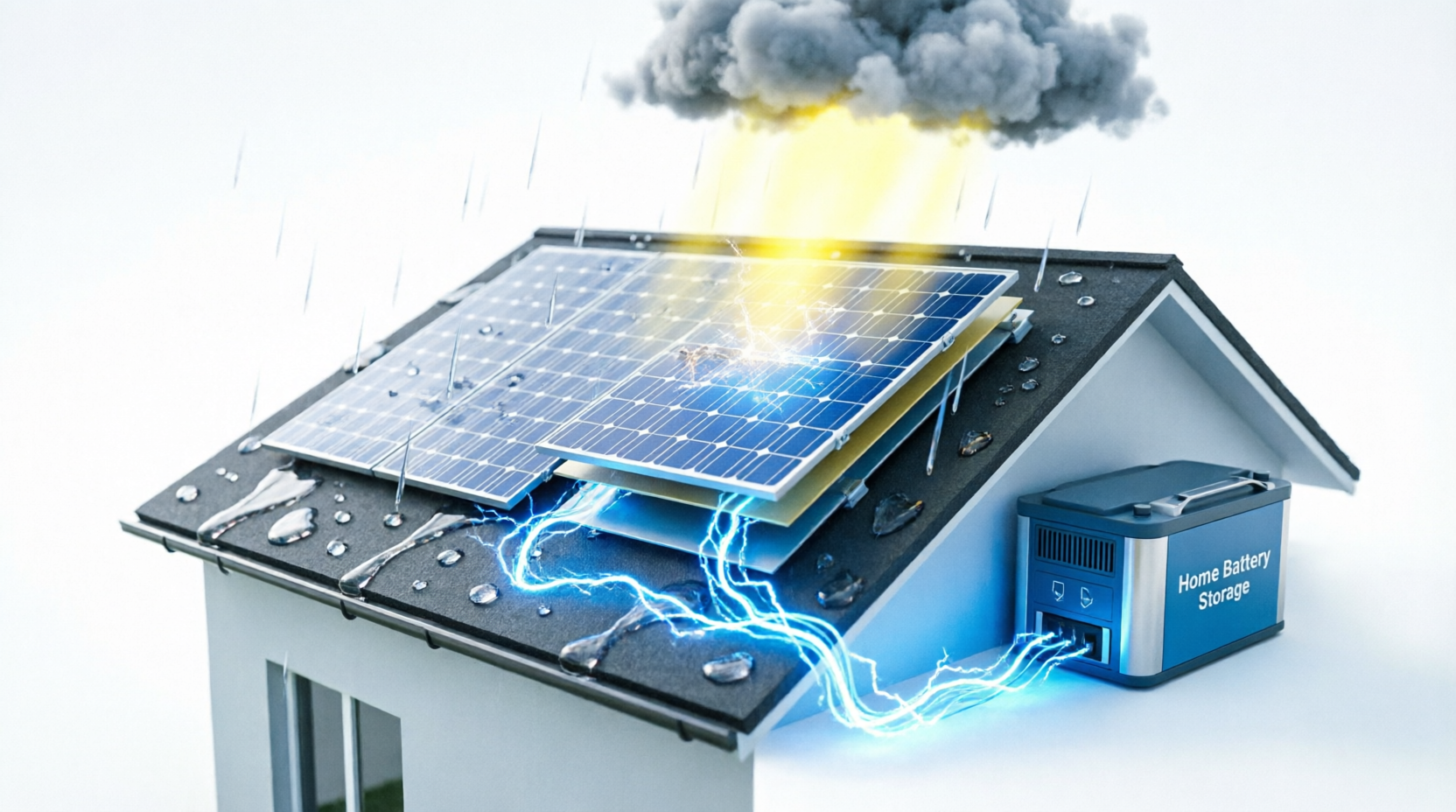
Scattered sunlight powers panels even in downpours.
Rain naturally scrubs dust for higher sunny output.
15-30% efficiency typical in US rainy seasons.
Cooler temps boost cell performance slightly.
Bifacial panels catch reflected ground light.
Storm-proof design handles high winds safely.
Why This Powers US Homes
Rainfall averages 37+ inches yearly in key solar states, yet panels offset 50-70% of bills through diffuse light capture. Washington homes log 3.8 peak sun hours daily despite clouds, rivaling sunnier Northeast spots. This reliability cuts outages during storms when grids falter.
Florida systems cleaned by hurricanes rebounded stronger. Explore practical energy savings for more home efficiency science.
Physics of Rainy Solar Generation
Photovoltaic cells thrive on photons from any direction. Clouds diffuse direct rays into omnidirectional light, hitting panel surfaces broadly. Silicon layers excite electrons regardless of angle, flowing as DC current to inverters.
Lower rain temps reduce cell heat—efficiency rises 0.5% per cooler degree below 77°F. “Edge effect” bounces extra rays off cloud sides for brief output spikes.
Why This Powers US Homes
Rainfall averages 37+ inches yearly in key solar states, yet panels offset 50-70% of bills through diffuse light capture. Washington homes log 3.8 peak sun hours daily despite clouds, rivaling sunnier Northeast spots. This reliability cuts outages during storms when grids falter.
Florida systems cleaned by hurricanes rebounded stronger. Explore practical energy savings for more home efficiency science.
Physics of Rainy Solar Generation
Photovoltaic cells thrive on photons from any direction. Clouds diffuse direct rays into omnidirectional light, hitting panel surfaces broadly. Silicon layers excite electrons regardless of angle, flowing as DC current to inverters.
Lower rain temps reduce cell heat—efficiency rises 0.5% per cooler degree below 77°F. “Edge effect” bounces extra rays off cloud sides for brief output spikes.

Performance by US Rain Zone
Bifacial panels add 10-20% from ground reflection in wet conditions.
Storm-Proof Engineering
Panels pass 140mph wind tests; rain sheds via 10-34° tilts. Microinverters per panel bypass shaded ones during partial cover. Heavy rain cuts light but cleans pollen/dirt, yielding 5-10% sunny day gains post-storm.
Seattle net metering credits summer excess against winter dips seamlessly.
Common Misunderstandings
More in our everyday science explained.
Optimization Strategies
Panel Upgrades
Choose bifacial monocrystalline for wet gains. Optimizers handle tree shade common in rainy zones.
Installation Tips
30-40° south tilt sheds water fast. Ground-mounts in flood-prone areas.
Test concepts with our simple science quiz.
| Boost | Gain | Ideal For |
|---|---|---|
| Microinverters | +15% partial shade | Tree-heavy yards |
| Battery Backup | Full storm autonomy | Hurricane zones |
| Anti-Soak Coating | Faster dry-out | Heavy rain areas |
Monitoring Apps
PVOutput tracks rainy performance; adjust for seasonal clouds.
Real Wins Nationwide
25% national install surge includes rainy states—federal 30% credits plus sales tax breaks accelerate ROI. Powers EVs through downpours, future-proofs rising rates.
FAQ
Solar output during heavy rain?
10-25% via scattered light; rebounds post-clean.
Best panels for rainy climates?
Bifacial mono with optimizers.
Wind/rain damage common?
Rare—certified to 140mph/1″ hail.
Batteries needed for clouds?
Recommended for seamless power.
ROI realistic in Seattle?
Yes, 7-9 years with net metering.