What Happens to Your Brain When You Sleep: Simple Science Explained
Learn what happens inside your brain during sleep — how it consolidates memories, clears waste, and prepares you for new learning. Clear, practical science for better daily life.
We often think of sleep as simply switching off the body and mind for rest. But while we sleep, our brain stays remarkably active, performing essential tasks that keep us healthy, sharp, and able to learn. Understanding what happens inside the brain during sleep can help us appreciate why good sleep matters so much in daily life.
In this article, we explore the key processes that occur in the brain at night — from strengthening memories to clearing waste — and how these affect our learning, mood, and overall well-being. No complex jargon, just clear explanations with practical takeaways.
The Different Stages of Sleep and Brain Activity
Sleep is not one long blank state. It cycles through several stages, each with its own pattern of brain activity.
In lighter stages, the brain processes the day’s events and begins sorting information. As we move into deeper sleep, powerful slow brainwaves appear. These waves are accompanied by short bursts of fast activity called sleep spindles.
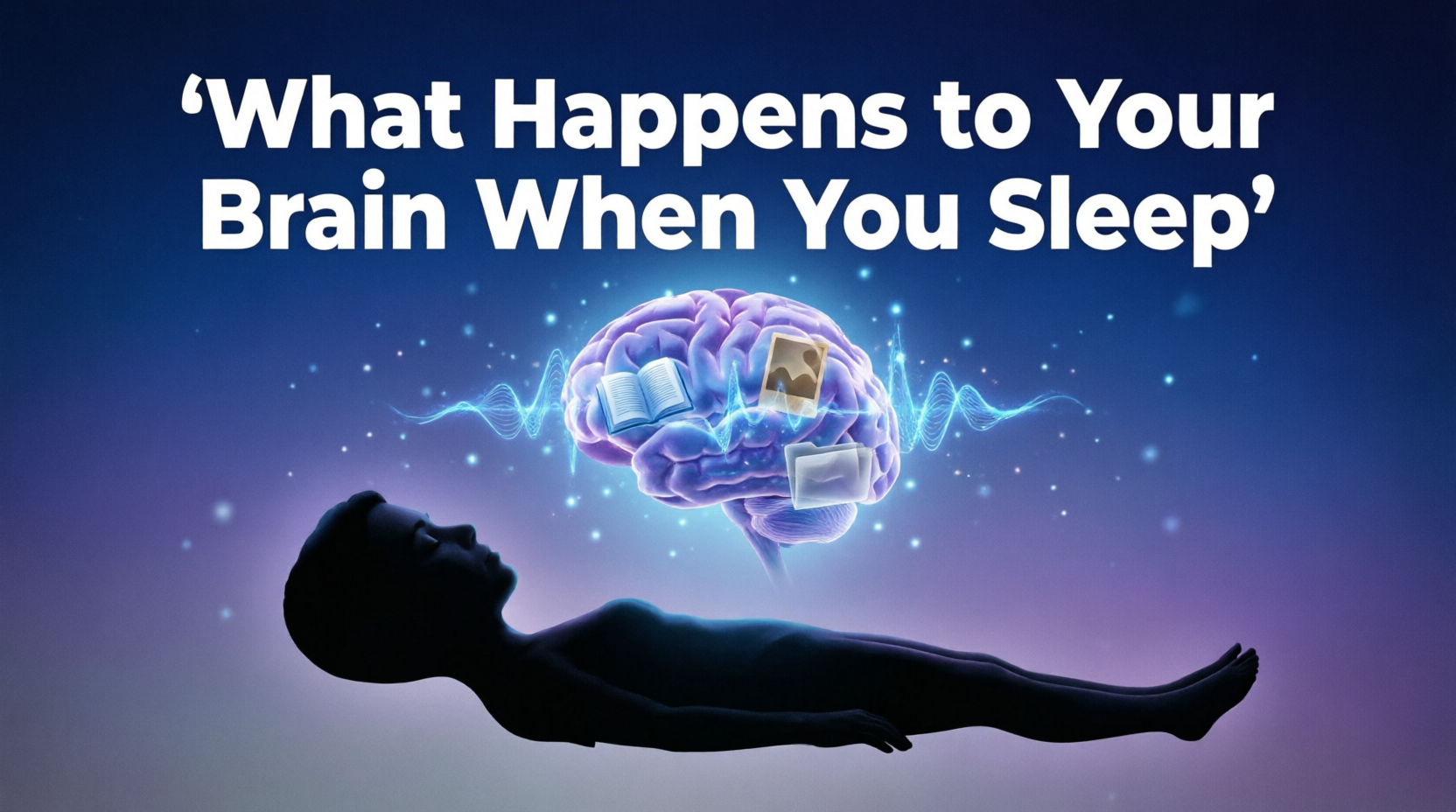
Sleep spindles work like a file-transfer system. They help move new experiences and facts from a temporary holding area (the hippocampus) into longer-term storage across the brain. This process protects memories and makes them easier to recall later.
During deep sleep, the brain also becomes highly synchronized, allowing it to restore and strengthen what we learned while awake.

How Sleep Prepares Your Brain for New Learning
Sleep works in two important directions for memory and learning.
First, sleep after learning helps “hit the save button.” It solidifies new information so you are less likely to forget it the next day.
Second, sleep before learning prepares the brain like a dry sponge ready to absorb fresh information. Without enough sleep, the hippocampus becomes less efficient — almost like it is already full and cannot take in more.
Studies using brain imaging show that after a full night of sleep, the hippocampus is active and ready during learning tasks. After sleep deprivation, this activity drops sharply, making it much harder to form new memories.
Memory Consolidation During Sleep
One of the brain’s most important nighttime jobs is memory consolidation. While we sleep, the brain replays and strengthens important connections formed during the day.
This is why pulling an all-nighter before an exam often backfires. The brain needs sleep to transfer short-term memories into stable long-term storage. Without it, even well-studied material can feel foggy the next morning.
In older adults, reduced deep sleep is linked to greater difficulty remembering new information, which may contribute to age-related memory changes.

Why This Matters in Daily Life
What happens in the brain during sleep directly affects how we feel and perform each day. Good sleep improves focus, creativity, and decision-making. It helps us learn faster and retain information longer.
On the other hand, even one night of poor sleep can reduce learning ability noticeably. Over time, ongoing sleep shortage affects mood, immune function, and even how the body handles stress and inflammation.
For students, professionals, or anyone trying to stay sharp, understanding these brain processes shows that sleep is not wasted time — it is active maintenance for a healthy mind.
Common Misunderstandings About Sleep and the Brain
Many people believe they can “catch up” on sleep during weekends. In reality, the brain benefits most from consistent nightly sleep rather than large recoveries later.
Another common myth is that the brain completely shuts down during sleep. In truth, different regions remain highly active, performing specialized cleaning, sorting, and restoring tasks.
Some also think that older age naturally means less need for sleep. Actually, the brain still requires quality sleep, but deep sleep stages often become shorter, which is why maintaining good sleep habits becomes even more important with age.
Practical Insights You Can Use
While we cannot control every aspect of sleep, small habits support the brain’s nighttime work:
- Maintain a regular bedtime and wake time, even on weekends.
- Keep the bedroom cool (around 18°C / 65°F) to help the body’s natural temperature drop that supports deep sleep.
- Avoid screens and bright lights close to bedtime, as they can interfere with the brain’s wind-down process.
- If you wake up and cannot fall back asleep after 20 minutes, get up and do a quiet activity in another room until you feel sleepy again.
These steps help create conditions for the brain to perform its important memory and restoration work.
FAQ
Does the brain really do important work while we sleep? Yes. The brain stays active during sleep, consolidating memories, clearing waste, and preparing for the next day.
What happens if I don’t get enough sleep for several nights? Learning ability can drop significantly, memory formation becomes harder, and the brain’s ability to regulate emotions and immune responses is affected.
Is it true that sleep helps prevent forgetting? Sleep after learning helps strengthen and protect new memories, reducing how quickly we forget information.
Can I improve memory just by sleeping more? Better sleep quality and consistency supports memory processes, but it works best alongside active learning and review during the day.
Why do I feel mentally foggy after a bad night’s sleep? The hippocampus and other memory-related areas do not function at full capacity without sufficient rest, making new learning and recall more difficult.
more recources
- https://wikipediasearch.com/tools/sleep-need-calculator/
- https://wikipediasearch.com/category/sleep-energy-habits/
- https://wikipediasearch.com/tools/memory-keeping-planner-organize-preserve-your-memories/
Written by Sharjeel — Founder, WikipediaSearch I enjoy breaking down science topics into clear, practical ideas that help us understand and improve daily life. Learn more about me
Disclaimer: This article is for educational purposes only and does not constitute medical or professional advice. If you have concerns about your sleep or health, consult a qualified healthcare provider.