Why Solar Still Powers Rainy Days
Solar panels generate 10-60% power in clouds via diffuse light—perfect for rainy US states. Photovoltaic basics, storm proofing, and efficiency tips explained simply.

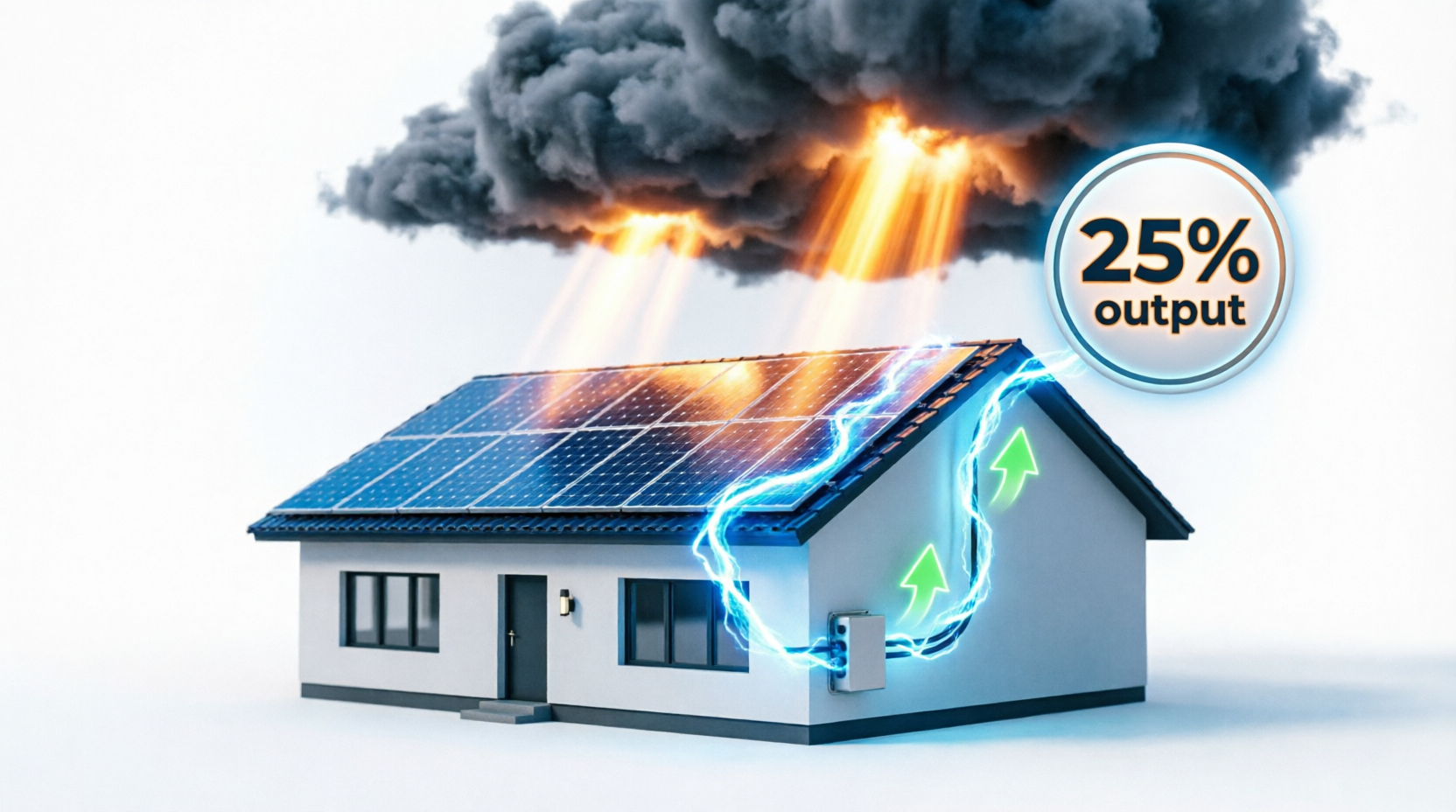
Cloudy skies don’t stop solar panels—modern systems capture scattered sunlight effectively, producing 10-25% of peak power even in overcast US weather. Homeowners in rainy states like Washington or during spring storms in Texas keep lights on thanks to this hidden efficiency. You’ll learn the simple physics, real US examples, and tips to maximize output year-round.
☁️ Clouds Can’t Kill Your Solar Power
Diffuse light scatters through clouds to reach panels.
Panels generate 10-25% power on overcast days.
Monocrystalline types excel in low light best.
Rain cleans panels naturally, boosting output.
Battery storage smooths cloudy day dips.
US storm-prone areas prove it works reliably.
Why This Matters Daily
Solar shines in cloudy US regions—Pacific Northwest generates billions in power yearly despite frequent overcast skies. Spring storms across TX/CA don’t halt production; systems cut bills 20-50% even in rain. For homeowners, this means reliable energy without sun worship.
Real example: Seattle homes average 30% “cloudy efficiency,” powering EVs through winter drizzles. Ties to energy savings—check our practical energy savings category.
Photovoltaic Basics Explained
Solar panels convert light photons to electricity via the photovoltaic effect. Silicon cells release electrons when hit by light energy, creating current. Direct sun maximizes this, but diffuse light from clouds works too—scattering boosts total exposure.
No heat needed; it’s photons, not temperature. Cloudy output: 10-25% peak on heavy overcast, 40-60% partly cloudy.

Cloudy Day Performance Breakdown
| Condition | Efficiency % | US Example |
|---|---|---|
| Clear Sun | 100% | CA Summer Peak |
| Partly Cloudy | 40-60% | TX Spring Storms |
| Heavy Overcast | 10-25% | WA Winter Rain |
| Rainy | 15-30% | FL Hurricane Season |
Modern monocrystalline panels (PERC/HJT) outperform in shade/clouds by 3-5%. Rain rinses dust, often increasing post-storm yield.
Storm Resilience in Action
US panels withstand 140mph winds—hurricanes like Irma/Michael left solar intact while grids failed. Grid-tied systems shut safely during outages; batteries enable island mode for essentials.
Florida installs powered fridges through 2017 storms. No damage reported in 220kph tests.
Common Misunderstandings
See everyday science explained for more physics myths.
Practical Tips to Maximize Output
Panel Choice
Opt for high-efficiency monocrystalline (20%+ rating). HJT types capture broader light spectrum.
Angle & Cleaning
Tilt 30-40° south-facing. Rain handles most cleaning; soft brush quarterly.
Storage Solution
Pair with 10kWh batteries—covers 80% cloudy needs. Use our simple science quiz to test knowledge.
| Upgrade | Benefit | Cost Range |
|---|---|---|
| Bifacial Panels | Catch ground-reflected light | +20% cloudy gain |
| Microinverters | Per-panel optimization | Handles partial shade |
| Battery Add-On | Storm-proof power | 1-2 day backup |
Location Hacks
East/west panels balance morning clouds. Track via apps like PVOutput.
Why This Matters
Cloudy solar viability expands green energy nationwide—25% US install growth in TX/CA proves it. Saves $1,500/year average household. Future-proofs against rising utility rates.
FAQ
Do solar panels work in clouds?
Yes, 10-60% efficiency via diffuse light.
Best panels for rainy US areas?
Monocrystalline PERC/HJT for low-light gains.
Storms damage solar?
No, engineered for 140mph winds.
Rainy day output realistic?
15-30% typical; cleans for better sunny days.
Need full sun for ROI?
No, cloudy regions like PNW payback in 6-8 years.

Author Note: Written by Sharjeel — Founder, WikipediaSearch. Last Updated: April 2026. Disclaimer: This article is for educational purposes only and does not constitute professional advice.